Learning Journey at UWC - Part IV

Updated: Apr 8, 2020
Today (March 9, 2020) marks my 21st day at UWC Pearson College. This blog post will discuss a few updates on how my week has been, personal insights and lingering questions. This week had a few highlights including a Global Affairs climate simulation, a trip to race rock island, and a rehearsal for a play known as “One World”. Also, I seek to share my thoughts on transformative learning and embodied learning experiences and how they relate to UWC Pearson college.
Global Affairs Climate Simulation
This event took place in the McCollingan Theatre as part of the weekly Global affairs speaker series. The event was intended to reflect the opinions different countries have with regard to climate change. I found this discussion to be very interesting as students represented their own home countries when discussing climate change issues. Watching this discussion made me feel like a global citizen as I was able to appreciate the climate-related challenges different countries face. For example, one of the students discussed the prolonged periods of drought in India. This lack of rain creates a difficult challenge for rural farmers that rely on monsoon rains to water their crops. Furthermore, one student from Greenland discussed the challenge associated with melting glaciers leading to rising global sea levels which in turn increase the risk of flooding along with coastal cities.

I personally found this fact very worrying as many of the largest cities in the world are close to sea level including London, New York and Rio de Janeiro. I know that the poorest are disproportionately affected by the sea flooding events. Thus, climate change challenges are likely to place the largest costs on those that are least able to adapt to change. One large global risk associated with flooding is rising inequality associated with housing displacement. Moreover, a student from Australia discussed how climate change leads to more intense and numerous forest fires that destroy wildlife, poor air quality, and housing displacement. The large costs associated with fighting these fires also divert funding from other publicly funded services such as education. Overall, this climate discussion highlighted the integrated nature of the world's problems and the need for collective action to fight climate change.
Trip to Race Rock Island
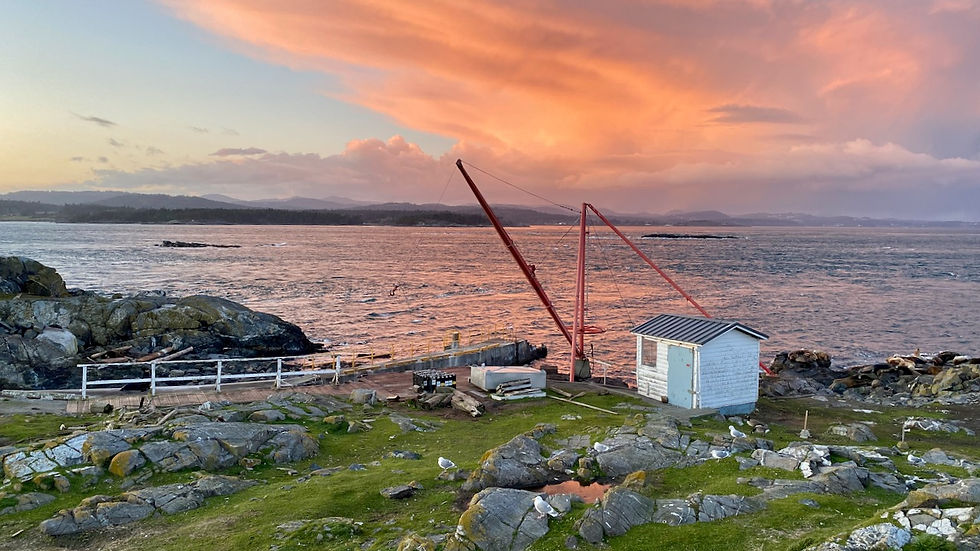
I had the opportunity to return to Race Rock island and look at the systems that help make this small island self-sufficient. My trip to the island included the opportunity to review the solar panel installation and water purification equipment. This equipment helps make the island eco-friendlier as the process used to support the island is sustainable.
The eco-guardian living on the island described how the systems worked and the need to continually monitor their safe operation.
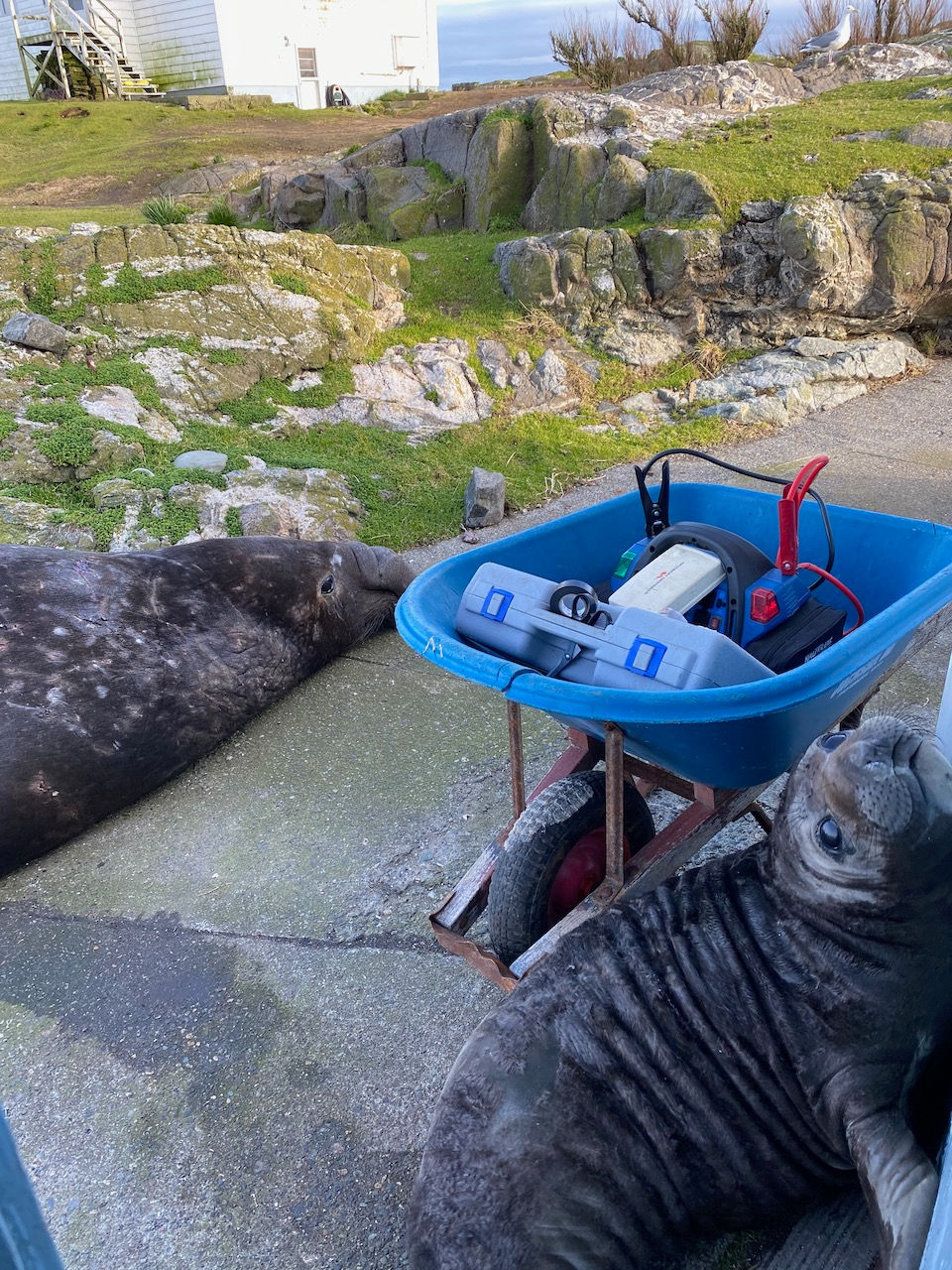

As a side note, I took a tour of the lighthouse on the island which is fully automated reducing the need for human operation. The eco-guardian discussed the significance of the island to the local wildlife. For example, I learned that the elephant seals use this island to give birth and take daytime naps. Also, there are a large number of sea birds that call this island home. Overall, the large amount of biodiversity on this island serves as a natural classroom to teach students lessons of biology and sustainability.
Practice for “One World” Event
Last Saturday the students performed their weekly rehearsal for an event called “One world”. This is a student-created cultural event that includes singing, acting and cultural plays performed for a large public audience in downtown Victoria. I was impressed with the diversity, level of preparation and enthusiasm that students have put into this event. Also, this “one world” event helps students express their cultural heritage while learning about other foreign cultures as well.


I was particularly impressed with the rehearsal by a group of women singing about issues of equality. Thus, this event is broader in scope than just cultural but reflective of broader issues in society as well. Furthermore, the students seemed to hold themselves to very high-level standards of professionalism when practicing. There is a great amount of research on student empowerment leading to higher levels of engagement.
“It is important that teachers employ connection or activating strategies to help students see how content and processes tie into their own lives. Similarly, a need exists for meaningful student engagement at multiple levels, not only with the content but engagement with student peers and with the instructor related to the discussions that take place around given topics. Empowerment can follow, during or much after a course has ended.” (Yearwood, Cox, & Cassidy, 2016)
This quote shows that students benefit significantly when they are allowed to express their own interests in a way that relates to the learning material. I have seen first hand how student empowerment gives students extra motivation to reach their full potential.
Also, this “one world” event has given students the opportunity to experience the embodied learning processes.

Through the act of physically performing the rehearsals and the event itself, students get to understand the subject matter at a deeper level. However, this deeper level of understanding may only be present in a testing environment when tests involve physical performance of understanding. “In their study, the benefits of a more embodied learning mode only became noticeable using an embodied learning test involving gestures” (Johnson-Glenberg, & Megowan-Romanowicz, 2017). I feel that physically performing knowledge is as important or more important than displaying knowledge in written tests. When students are displaying their knowledge through embodied acts this is an application of knowledge that has a high degree of relevance to their daily lives.

References
Yearwood, D., Cox, R., & Cassidy, A. (2016). Connection-Engagement-Empowerment: A Course Design Model. Transformative Dialogues: Teaching & Learning Journal, 8(3). Retrieved from: https://www.kpu.ca/sites/default/files/Transformative%20Dialogues/TD.8.3.2_Yearwood_etal_Connection-Engagement-Empowerment.pdf
Skulmowski, A., & Rey, G. D. (2018). Embodied learning: introducing a taxonomy based on bodily engagement and task integration. Cognitive research: principles and implications, 3(1), 6. Retrieved from: https://www.ncbi.nlm.nih.gov/pmc/articles/PMC5840215/
Johnson-Glenberg, M. C., & Megowan-Romanowicz, C. (2017). Embodied science and mixed reality: How gesture and motion capture affect physics education. Cognitive Research: Principles and Implications, 2(1), 24.


Comments